Signs Your Waterproofing Has Failed (And Next Steps)
Why Waterproofing Failure Should Never Be Ignored
Waterproofing is your home’s first line of defense against seepage, dampness, and long-term structural damage. But like any protection system, waterproofing can fail over time due to weather, aging, poor application, or material fatigue. When it does, the signs start small — but quickly turn into major repair expenses if ignored.
This guide explains the most common signs of waterproofing failure and the steps you should take to protect your home before damage spreads.
1. Damp Patches or Peeling Paint on Walls
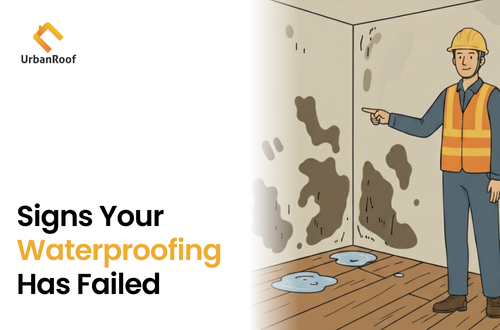
One of the earliest indicators of failed waterproofing is dampness on interior or exterior walls. You may notice:
- Peeling, bubbling, or flaking paint
- Yellow or brown stains
- Powdery white deposits (efflorescence)
These symptoms occur when water penetrates through cracks or worn-out waterproof layers and reaches the plaster surface.
2. Cracks on Terrace, Walls, or Roof Surface
Hairline cracks may look harmless, but they allow rainwater and moisture to seep into concrete. Over time, these cracks widen and lead to:
- Water leakage inside rooms
- Weakened slab and structural elements
- Corrosion of reinforcement steel
Cracks are often caused by weather movement, structural settlement, or poor-quality waterproofing products.
3. Mould, Musty Smell, or Fungal Growth
A musty or earthy smell inside rooms usually indicates trapped moisture behind walls. This is a health hazard and a clear sign that waterproofing has failed.
- Mould patches near ceilings or corners
- Black, green, or white fungal spots
- Persistent humidity in rooms
Mould spreads fast and impacts indoor air quality — especially dangerous for children, elderly people, and asthma patients.
4. Water Seepage from Ceilings During Rain
If you notice dripping, dampness, or stains on ceilings during monsoon, your terrace waterproofing is compromised. This typically happens when:
- The waterproof layer has cracked or worn out
- Drains are clogged, causing water ponding
- Terrace slope is improper, allowing water to stagnate
Ceiling seepage should always be treated as urgent because the water reaches deep into concrete layers.
5. Blistering, Bubbling, or Hollow Sounds in Plaster
When moisture collects behind wall plaster, it causes the surface to swell or detach from the base. You may observe:
- Blisters or bubbles appearing on painted surfaces
- Hollow sound when tapping the wall
- Loose or cracking plaster
This is a strong sign of moisture intrusion from the backside — usually due to exterior waterproofing failure.
6. Efflorescence on Walls or Floors
Efflorescence is the white, powdery substance seen on walls or floors. It forms when water dissolves salts inside the wall and pushes them to the surface.
This is a symptom of chronic moisture exposure, indicating long-term water seepage issues.
7. Rising Damp and Wetness at Wall Base
If dampness begins from the floor and rises upward along the wall, it indicates rising damp — usually due to a failed damp-proof course (DPC) or poor flooring waterproofing.
- Wetness appearing in straight lines
- Dark patches near skirting
- Salt deposits along floor edges
This type of dampness worsens over time if left untreated.
8. Water Pooling or Stagnation on Terrace
If terrace water does not drain within a few hours after rain, the slope or drainage is faulty. Stagnant water weakens waterproofing membranes and causes cracks, peeling, and seepage.
This is one of the biggest reasons for roof leakage in Indian homes.
What to Do Next: Immediate Steps
Once you notice any signs of waterproofing failure, act quickly to prevent further damage.
1. Identify the Exact Source of Leakage
Sometimes the visible damp spot is not where the leak originates. Use thermal imaging or moisture meters to detect hidden moisture paths.
2. Avoid Temporary Cosmetic Fixes
Painting over damp patches or applying putty only hides the problem temporarily. Moisture will return unless the root cause is solved.
3. Repair Plumbing or Drainage Issues First
If the leak is due to plumbing or drainage obstruction, fix that before waterproofing. Otherwise, the solution won’t last.
4. Choose the Right Waterproofing System
The correct treatment depends on the issue:
- Polyurethane (PU) or acrylic coatings for terraces
- Injection grouting for deep cracks
- Cementitious coatings for bathrooms and wet areas
- Bituminous membranes for industrial or large terraces
5. Get a Professional Waterproofing Audit
An expert assessment ensures accurate diagnosis and long-lasting results. UrbanRoof uses thermal imaging, moisture mapping, and engineering-based inspections to find the true cause of leakage.
Final Thoughts
Waterproofing failure is not just a cosmetic issue — it’s a structural warning. Early action saves money, prevents damage, and protects your home’s long-term health.